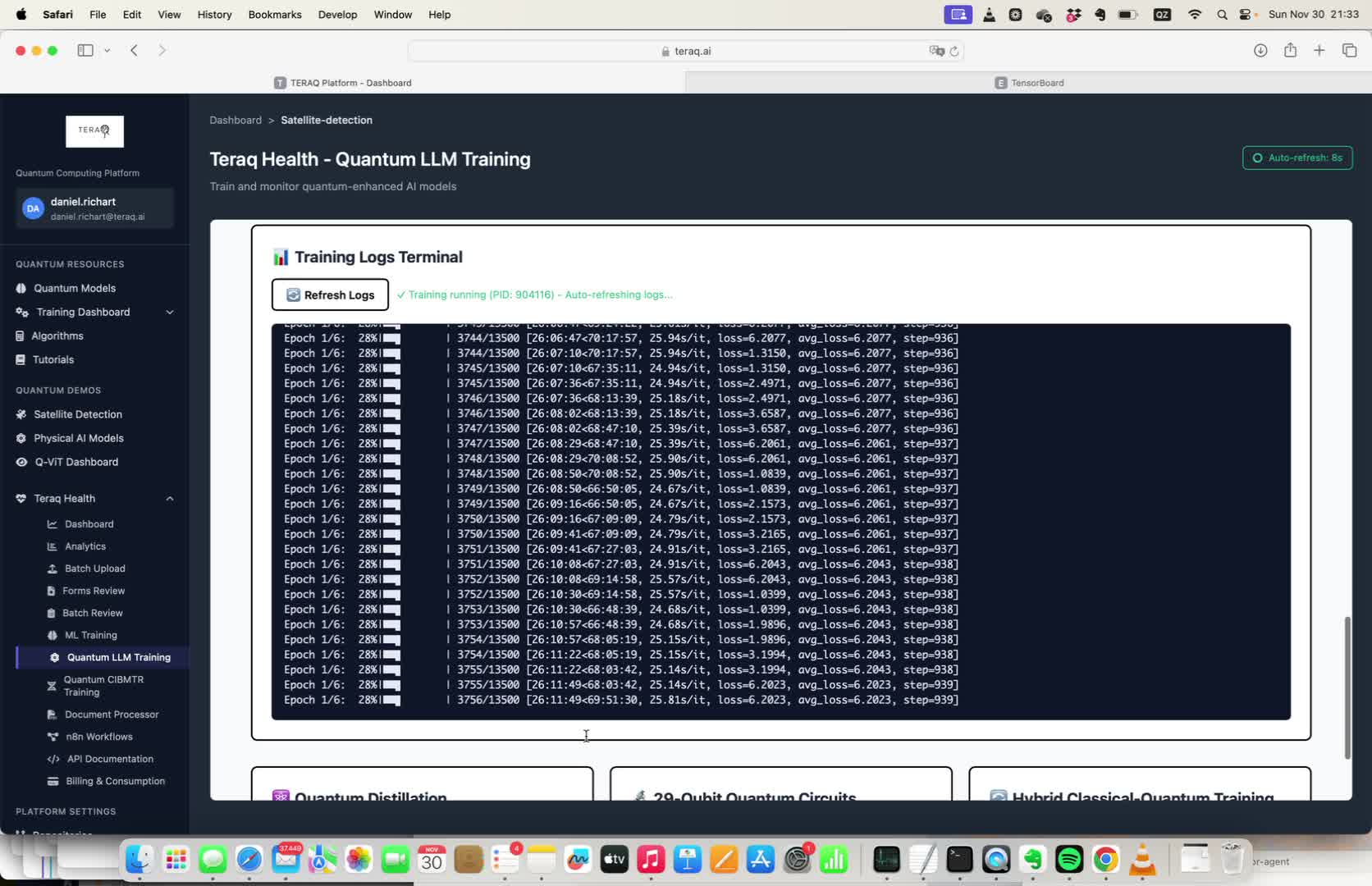
1. Introduction to TERAQ and Quantum Search (0:00)
Welcome to the future of search: Quantum Search.
Introduction to TERAQ, a company with 20 years in quantum computing.
Application of quantum computing in various domains: satellite, medical, automotive, robotics, and financial.
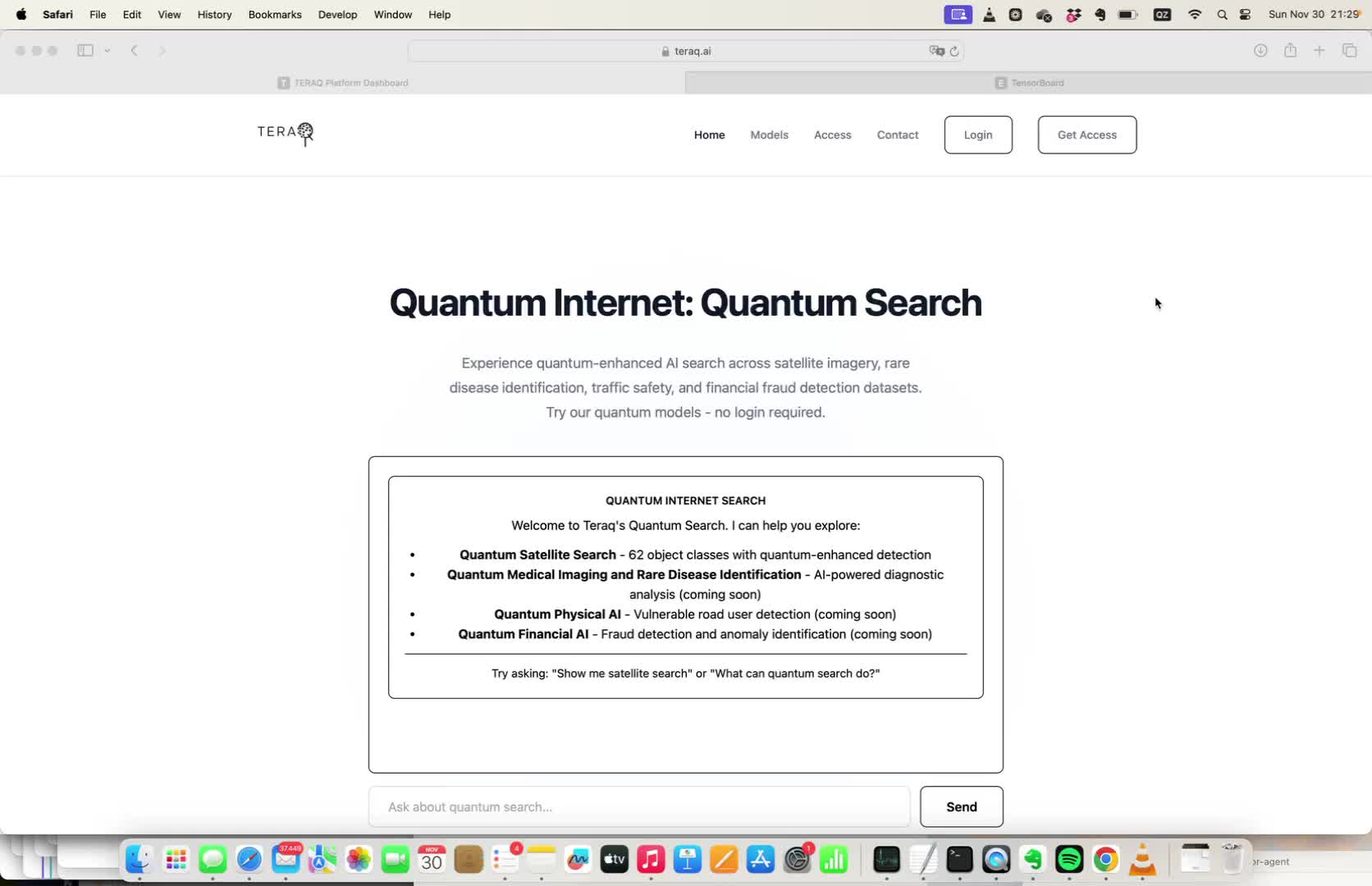
2. Importance of Detecting Rare Events (0:18)
Challenges in detecting rare events in extensive datasets.
Example: Vulnerable road users like cyclists.
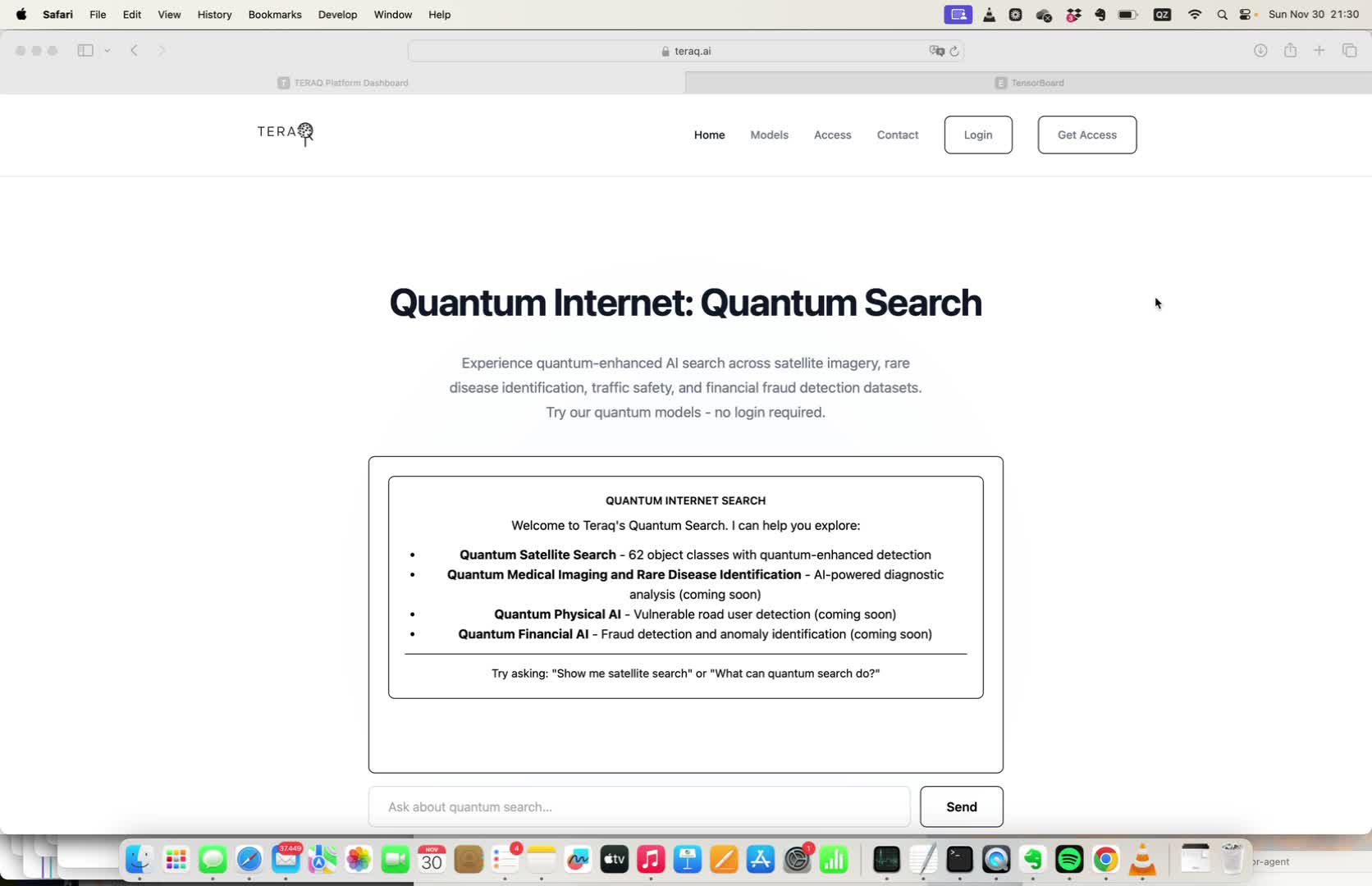
3. Platform Overview (0:32)
Secure login to the platform.
Dashboard features:
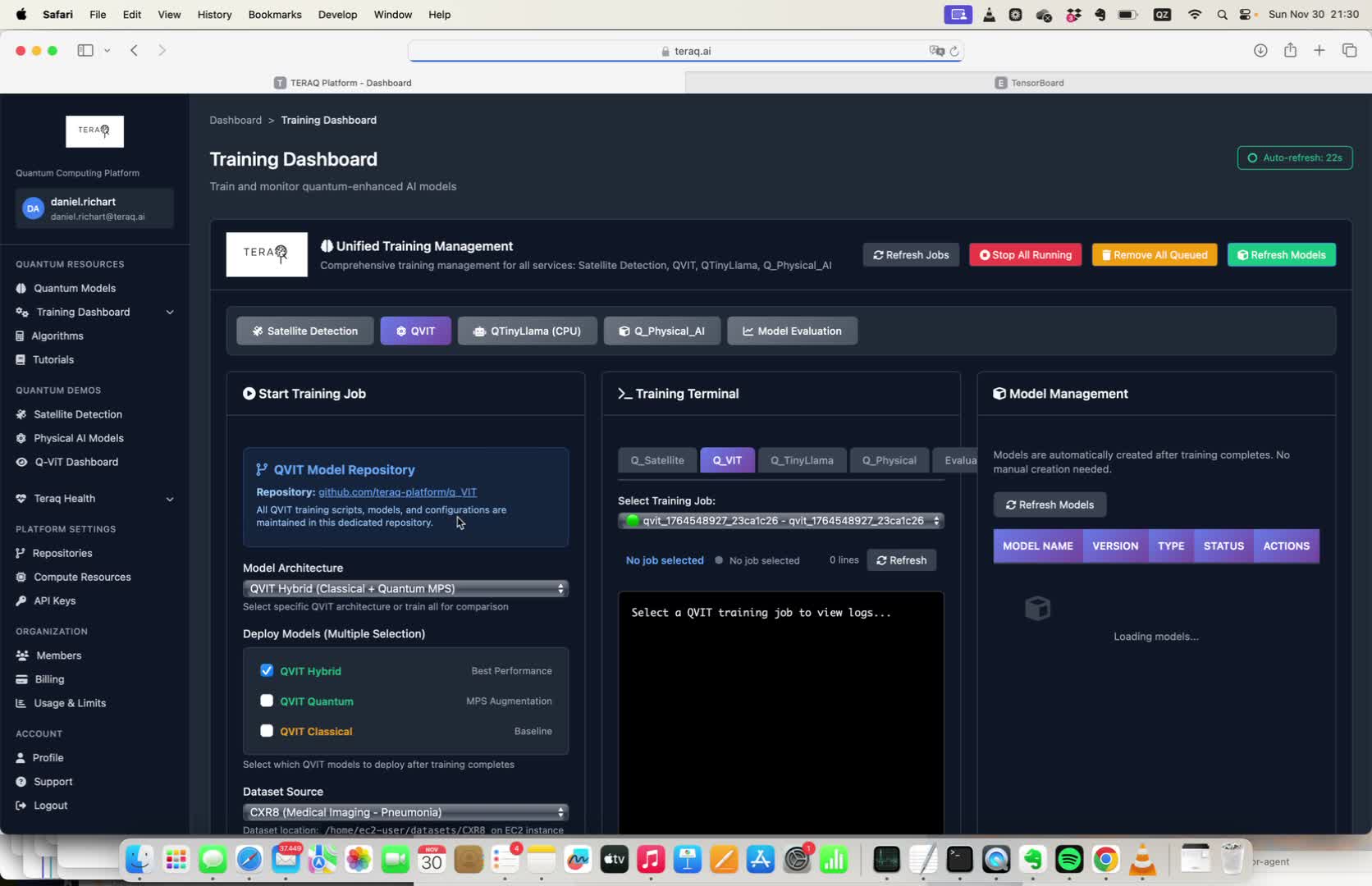
- Overview of different training processes.
- Comparison of satellite-based detection and quantum vision transformer-based detection.
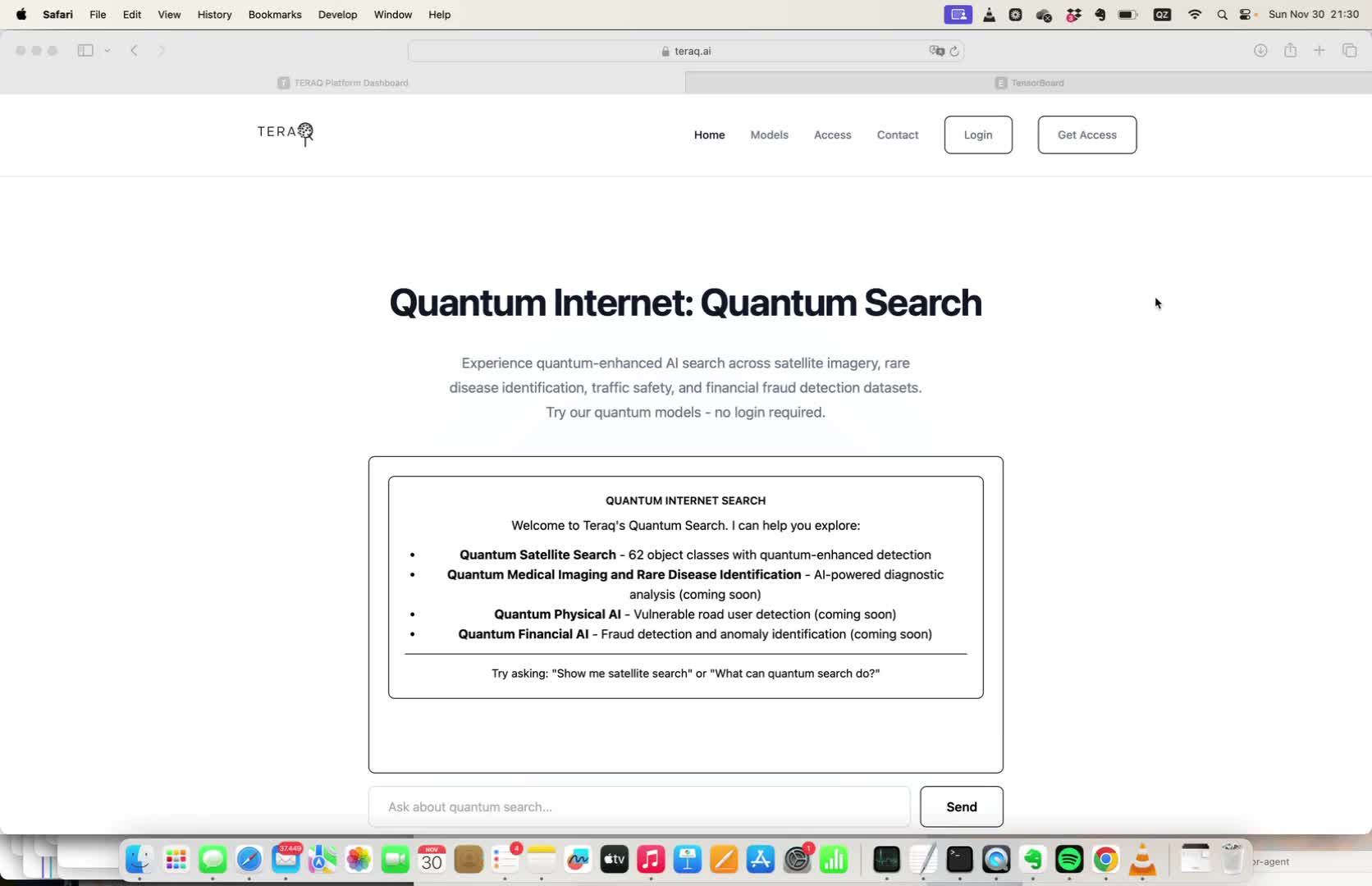
4. Benchmarking and Model Comparison (0:47)
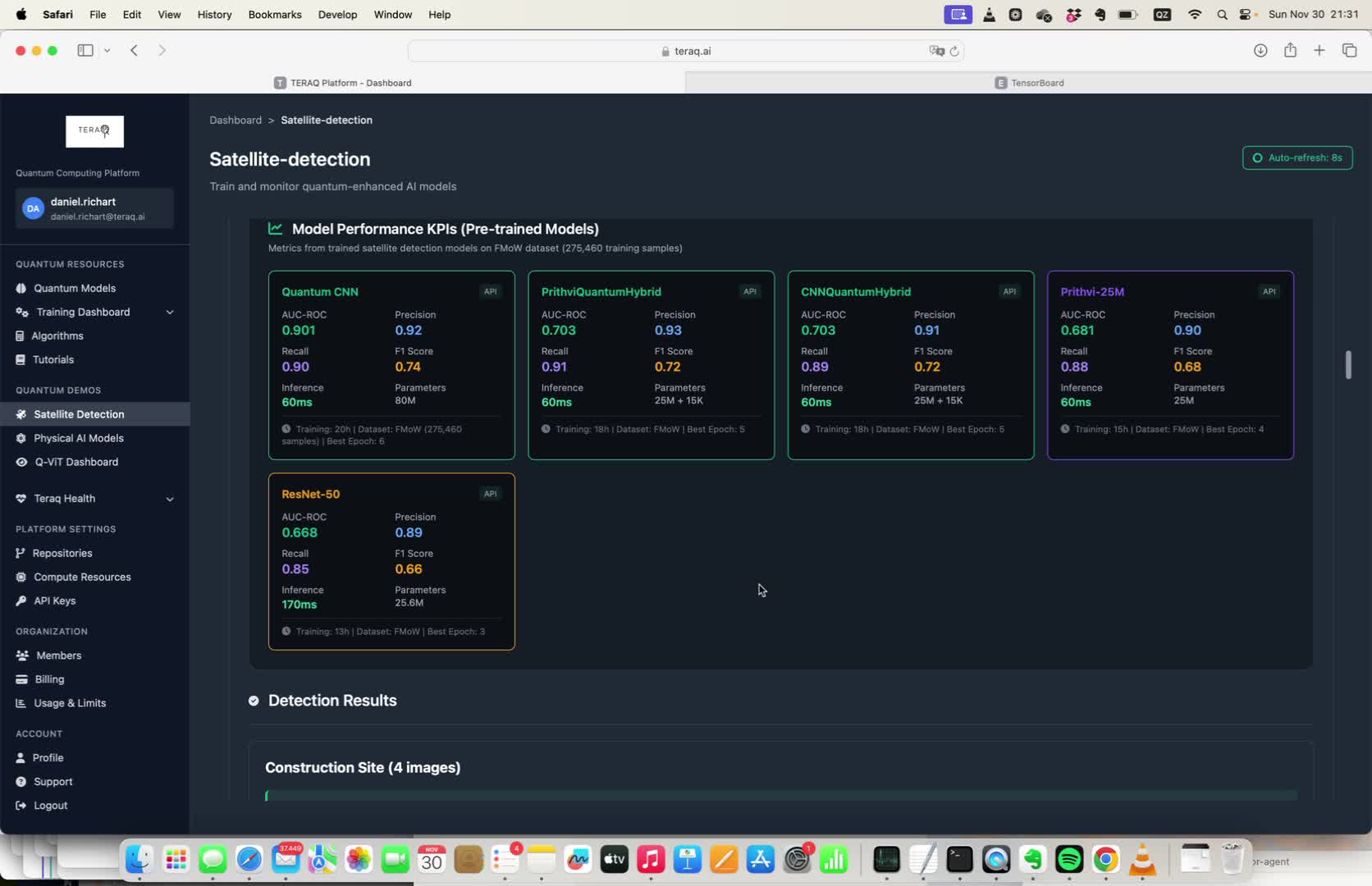
Review of different models and architectures.
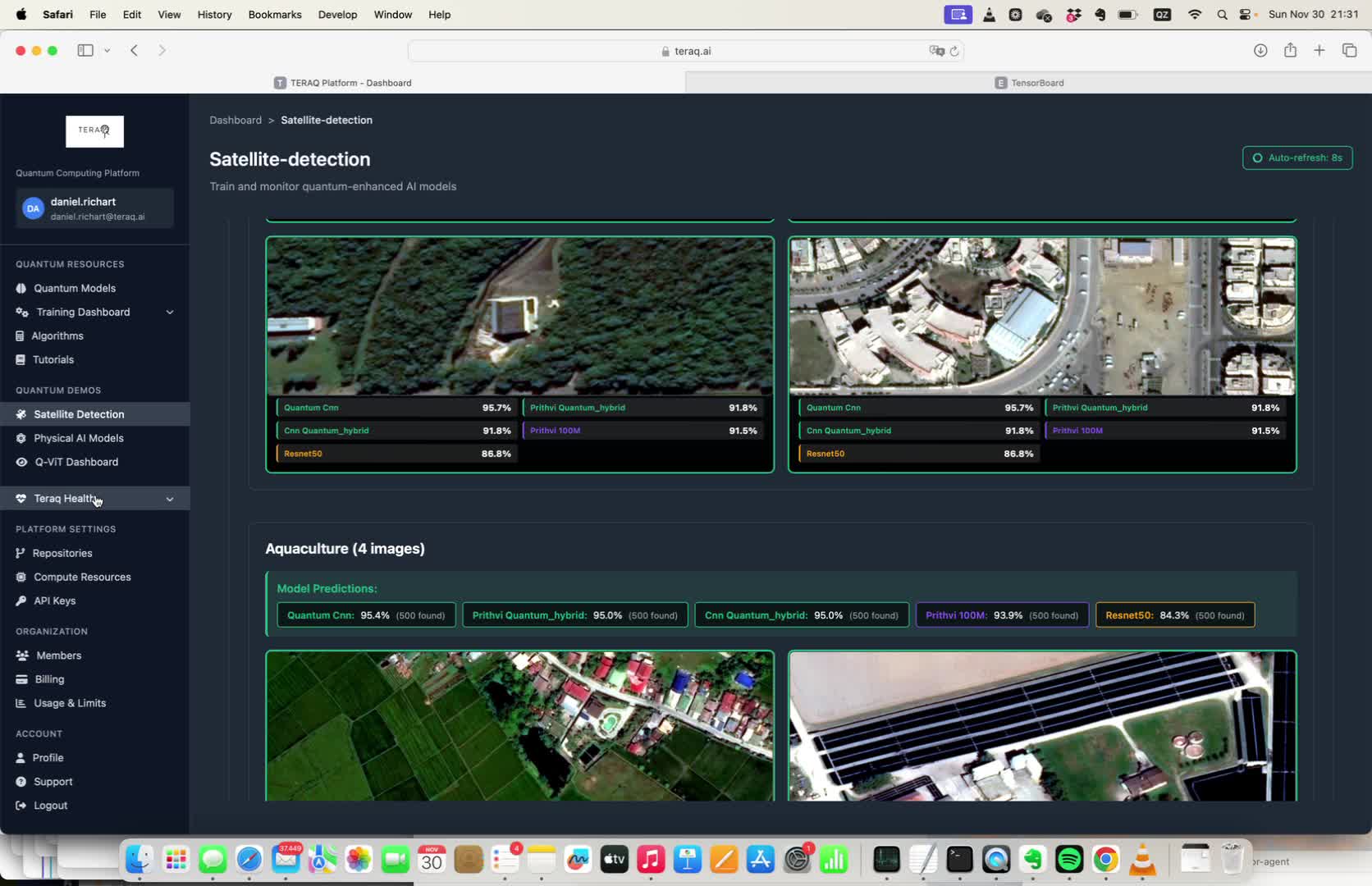
Comparison of results on various datasets (e.g., construction sites, airports).
Classical methods require significantly larger models for reliable detection.
5. Critical Use Cases in Healthcare (1:23)
Importance of detecting rare diseases in clinical trials and drug development.
Need for processing extensive electronic health records (EHR).
Cost considerations for data extraction.
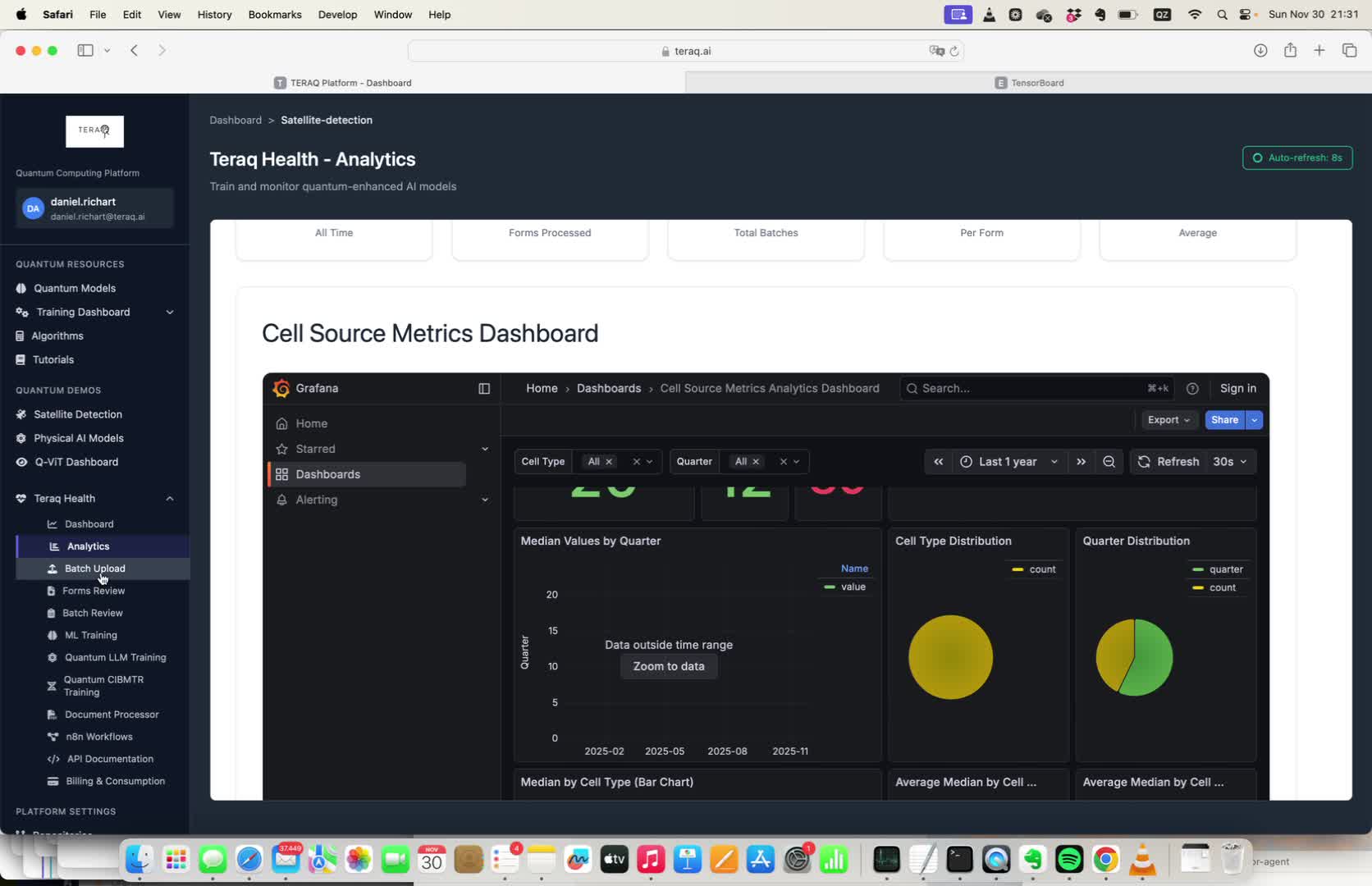
6. Key Performance Indicators (KPIs) Tracking (1:49)
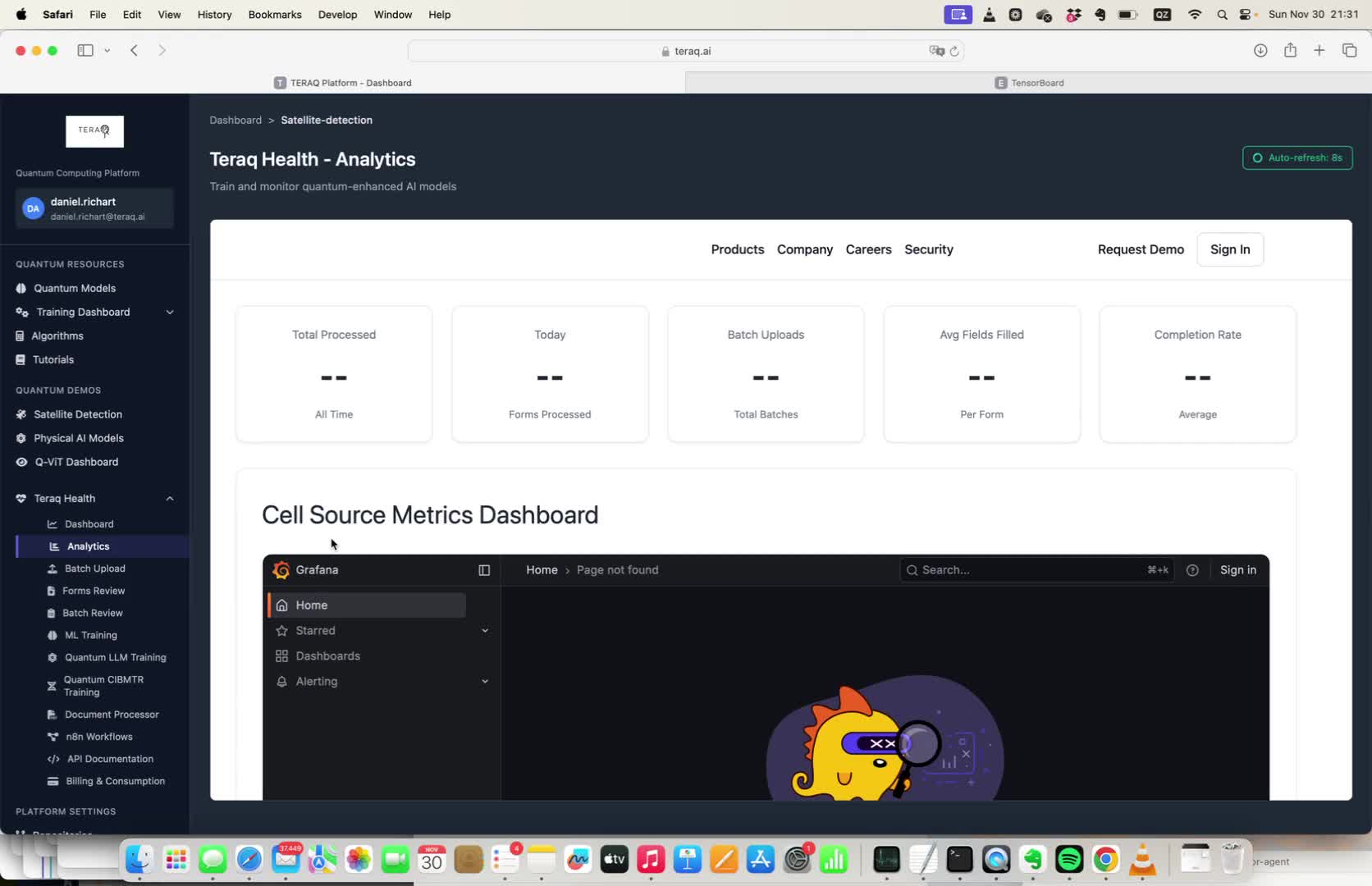
Tracking key KPIs relevant to data centers.
Generation of survivor curves for reporting.
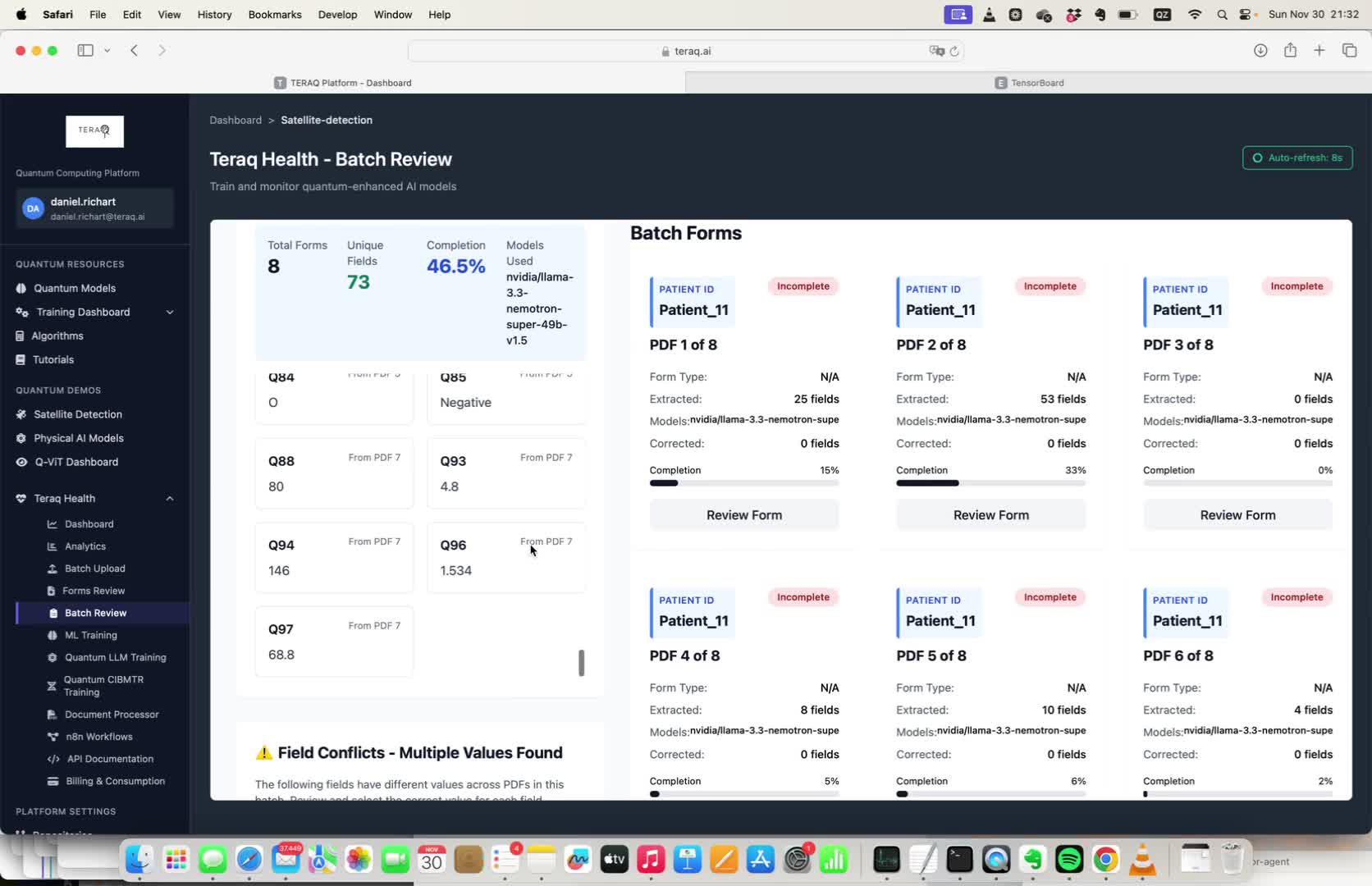
7. Automation and Efficiency (2:01)
Automation reduces processing time from hours to five minutes per file.
Review and correction of processed data.
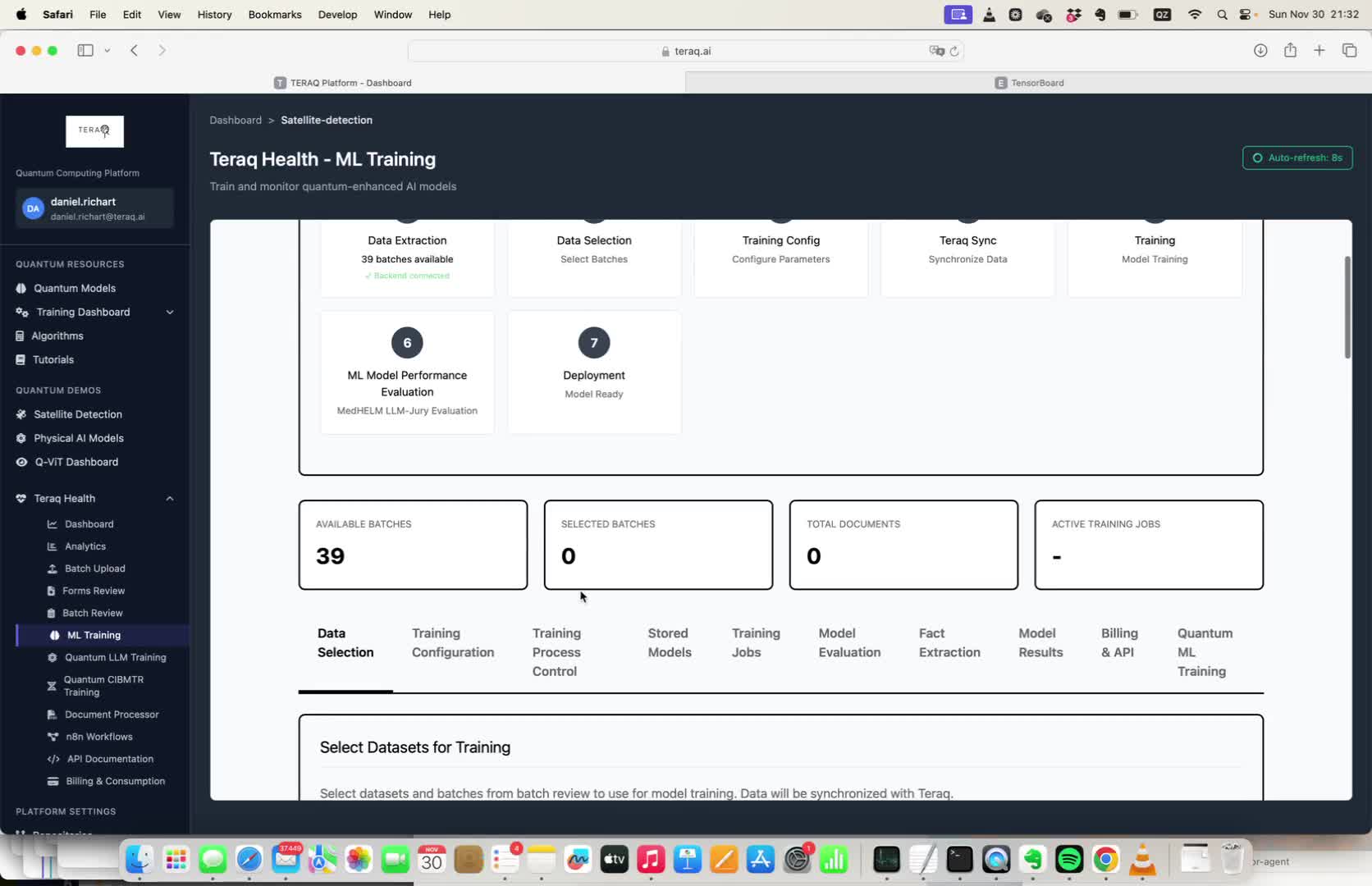
8. Data Extraction and Model Training (2:25)
90% efficiency in data extraction.
Flexibility in configuring training processes.
Example of training models ranging from 7 billion to 70 billion parameters.
9. Cost Management in Model Training (2:43)
Costs associated with model training (e.g., $1,000 to $10,000 per model).
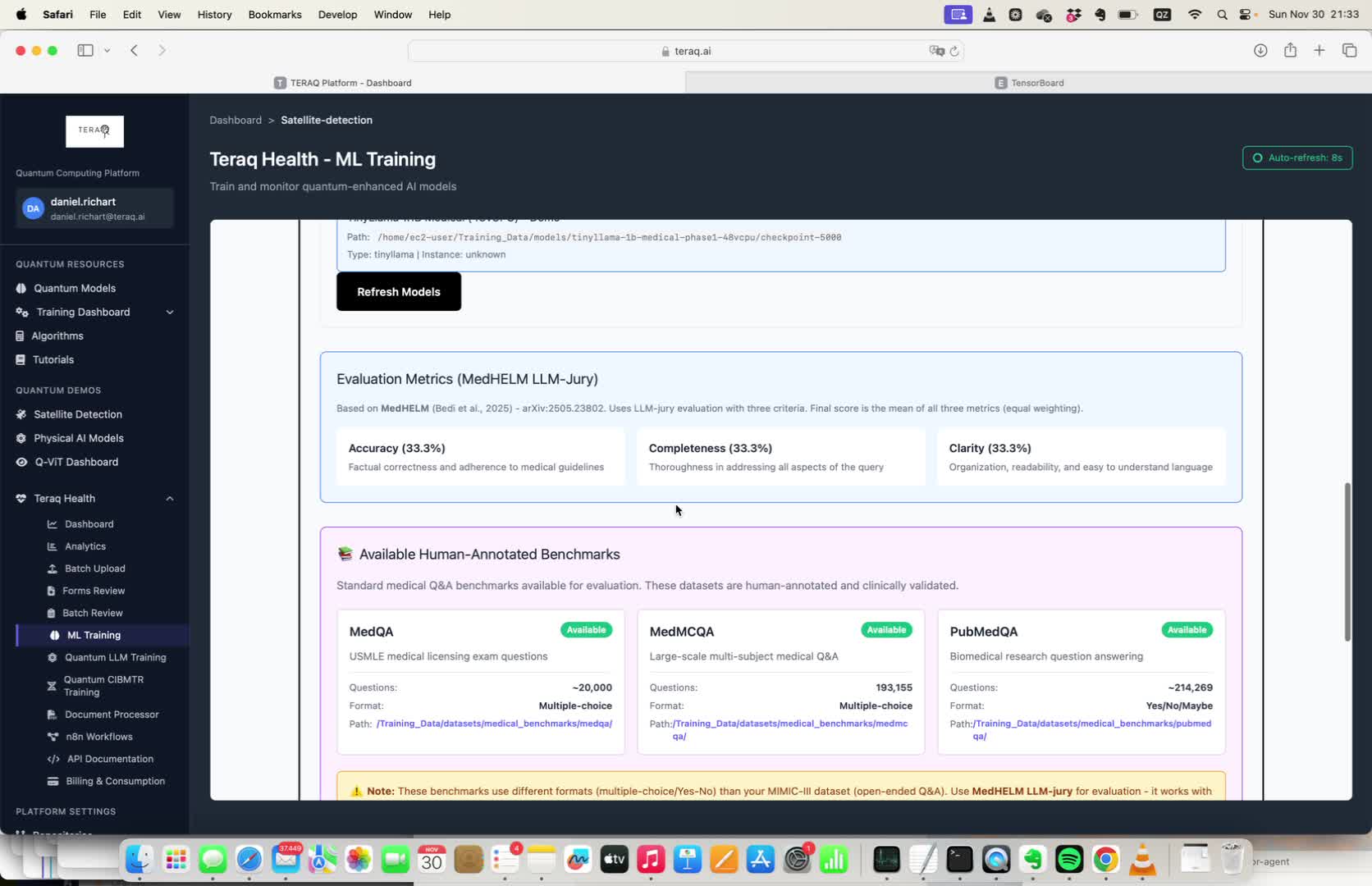
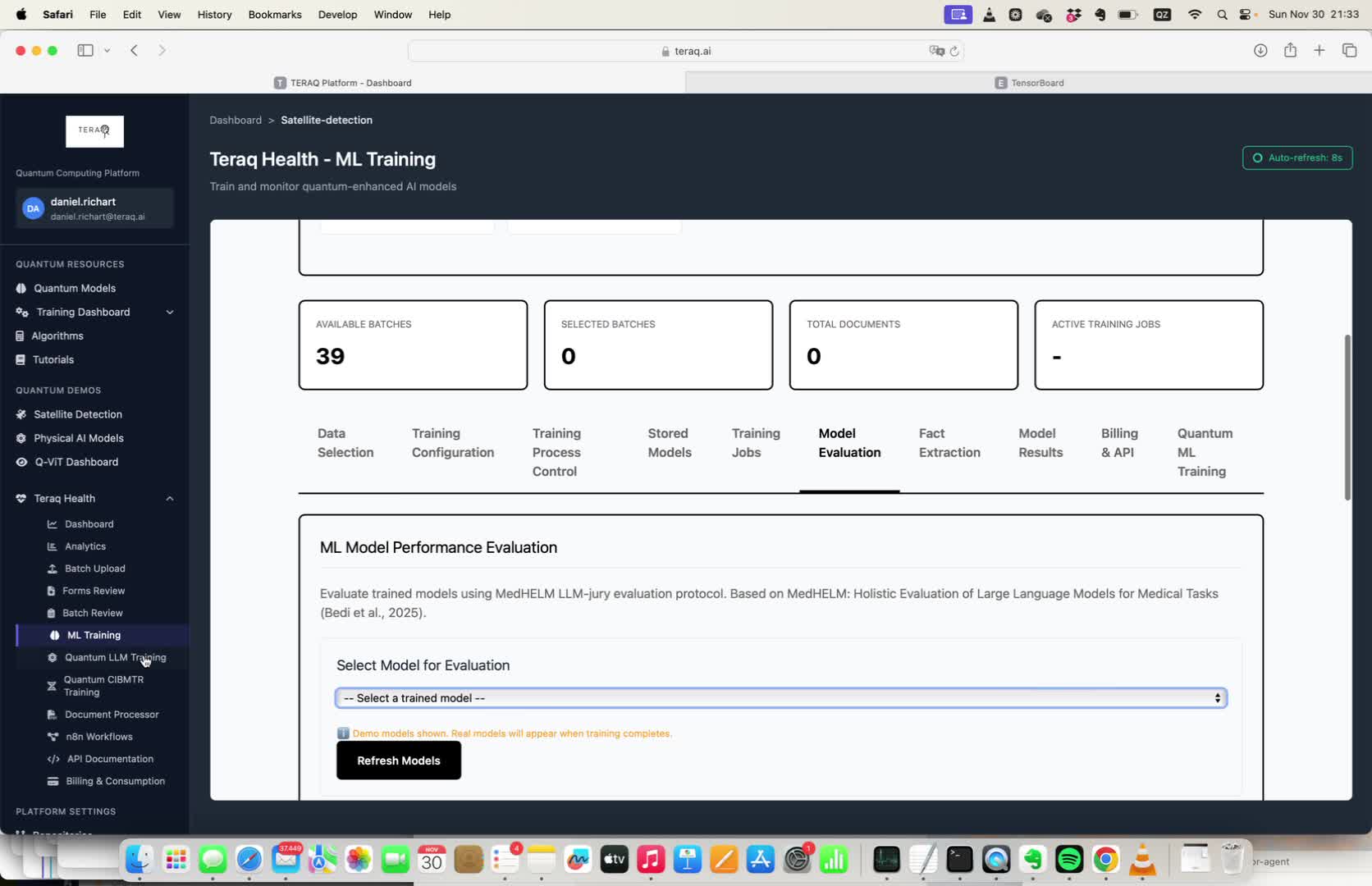
10. Performance Evaluation (3:05)
Evaluation of model performance on various datasets (MedQA, PubMedQA).
Retraining models using quantum machine learning to optimize resources.
11. Advanced Analytics and Survival Prediction (3:27)
Leveraging quantum computing for improved survival prediction rates.
Importance of accuracy and processing time in clinical trials.
12. Integration and Flexibility (4:07)
Easy integration into existing data centers.
Use of flexible API codes with key authentication and access control.
13. Conclusion (4:29)
Recap of capabilities: retraining models at low cost for various use cases.
Thank you for your attention.